Source Bamboo Charcoal Facial Mask for Whitening and Pore Care
Find 30 bamboo charcoal facial mask options featuring non-woven and cotton materials. Compare OEM brands with FDA and SGS certifications for whitening, pore cleaning, and moisturizing applications suitable for all skin types; compare the available evidence and request quotations based on your requirements.
Key considerations
Products List






Comprehensive Sourcing Guide
Bamboo Charcoal Facial Mask Sourcing Guide
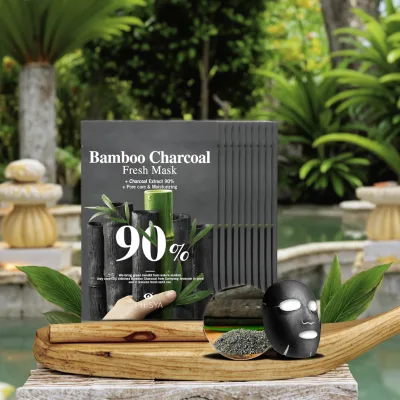
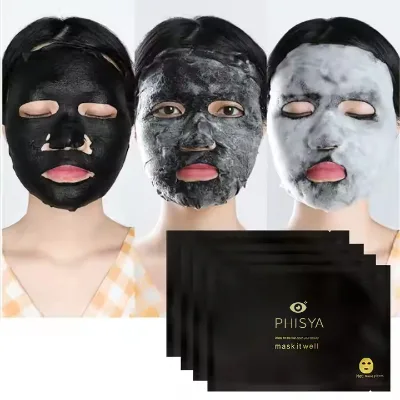
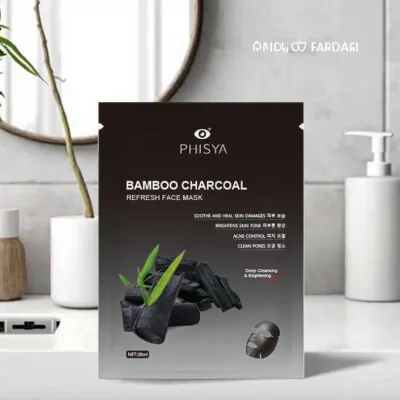
Buyers evaluating bamboo charcoal facial masks must first distinguish between compressed formats and standard sheet varieties, as the supplied data indicates a specific compressed form with a black color profile. This compressed structure often implies a different dissolution mechanism compared to pre-cut sheets, requiring verification of the exact sachet size and standard dimensions like 15x20 cm or 20x23 cm to ensure compatibility with existing packaging lines.
Procurement teams should also note that while the core material is bamboo charcoal, some listings specify 100% cotton or non-woven substrates, which significantly alters the product's absorbency and texture. Understanding these material variances is critical before placing orders, as the intended application—whether for makeup removal, pore cleaning, or general whitening—depends heavily on the specific fiber composition and the presence of active ingredients like bamboo charcoal.
Product Scope and Observed Listing Signals
The market for these masks reveals a wide range of customization options, with many suppliers offering tailored packing solutions ranging from individual packs to bulk cartons. Buyers should expect to encounter products labeled with features such as whitening, pore cleaning, and firming, which are common claims for this category, but must verify that these specific benefits align with the actual ingredient list provided by the manufacturer.
Listing signals also indicate a diverse target audience, with some products explicitly marked for adults while others cater to all ages or specific skin types like sensitive or combination skin. This variation suggests that a single supplier may offer multiple SKUs, so buyers must carefully cross-reference the stated skin type and age group against their specific market requirements to avoid purchasing mismatched inventory.
Technical Specifications to Verify
Dimensional accuracy is a primary technical concern, as observed standards vary between 15x20 cm and 20x23 cm, with some specialized items like eye pads measuring 6 cm in diameter. Procurement teams must confirm the exact standard size for each order to ensure the mask fits the intended facial contours and to prevent waste during the application process, especially when dealing with compressed formats that expand upon hydration.
Material composition and shelf life are equally critical verification points, with observed shelf lives ranging from two to five years depending on the specific formulation and packaging. Buyers should request detailed specifications regarding the main ingredient concentration and the specific type of non-woven or cotton fabric used, as these factors directly influence the product's efficacy in delivering moisture and removing impurities from the skin.
Compliance and Safety Documentation
Safety compliance is non-negotiable for facial masks, and the available data highlights certifications such as FDA, SGS, ISO/9001, and GMPC as key indicators of a supplier's quality management systems. Buyers must insist on seeing valid certificates for these standards before finalizing any contract, as they provide assurance that the manufacturing processes adhere to international safety and hygiene protocols required for cosmetic products.
Environmental and chemical safety standards are also emerging as critical factors, with some listings mentioning RoHS compliance and biodegradable features. Sourcing teams should verify if the bamboo charcoal and any associated binding agents meet these environmental claims, ensuring that the final product does not contain prohibited substances and aligns with the sustainability goals of the importing region.
Cost Drivers and Commercial Terms
Pricing in this sector is highly variable, with observed ranges spanning from $0.02 to $4.30 per unit, driven largely by the complexity of customization and the volume of the order. Buyers should anticipate that lower price points often correlate with higher minimum order quantities, as the data shows MOQs ranging from 5 units to 100,000 units, necessitating a careful balance between inventory costs and cash flow management.
Lead times and sample availability are significant commercial variables that impact the overall procurement timeline, with typical lead times falling between 25 and 35 days and sample times taking 5 to 7 days. Procurement planners must factor these durations into their production schedules, especially when dealing with OEM branding or customized packaging, as these value-added services often extend the delivery window beyond standard manufacturing periods.
Supplier Qualification and Quality Control
Supplier qualification should begin with a thorough review of their production origin, as the majority of listed products originate from Guangdong or mainland China, regions known for specific manufacturing capabilities. Buyers must assess the supplier's ability to handle the specific transportation modes listed, such as air, sea, or land, to ensure that the logistics chain can support the fragile nature of compressed masks and maintain product integrity during transit.
Quality control protocols must be explicitly defined in the purchase agreement, focusing on the consistency of the compressed form and the uniformity of the black coloration. Since the product features include specific functions like blemish clearing and anti-wrinkle effects, buyers should require pre-shipment inspections that verify the physical dimensions and the integrity of the packaging, ensuring that the final delivered goods match the approved samples exactly.
Long-Term Procurement Checks
Sustainable sourcing requires ongoing monitoring of the supplier's ability to maintain consistent quality over time, particularly regarding the shelf life and stability of the bamboo charcoal ingredients. Buyers should establish a schedule for periodic re-verification of certifications like ISO/9001 and GMPC to ensure that the supplier's quality management systems have not degraded, which could compromise the safety and efficacy of the facial masks.
Market dynamics and regulatory changes also necessitate a long-term strategy that includes regular reviews of the product's performance claims and material composition. As consumer preferences shift towards more eco-friendly or specialized skin care solutions, procurement teams must remain agile, ready to adjust specifications for skin type or feature sets to ensure the product line remains competitive and compliant with evolving industry standards.
FAQs
What certifications do bamboo charcoal facial mask suppliers typically hold?
Listed suppliers commonly reference certifications such as FDA, SGS, ISO/9001, and GMPC. Certification coverage varies by listing, so confirm the exact certificates and request documentation before ordering. Certification affects export eligibility, especially for cosmetic products entering regulated markets, so verify that the supplier's documents are current and match the product specification you intend to purchase.
Can bamboo charcoal facial masks be customized with my own brand and packaging?
Yes, customization is generally available, and packing can often be customized as well. Many suppliers operate under OEM arrangements, offering options such as individual packs, bag packages, cartons, or middle boxes. Confirm minimum order quantities, sample lead times of around five to seven days, and artwork requirements before committing to a production schedule.
What sizes and forms are available for bamboo charcoal facial masks?
Listed products appear in compressed non-woven form, with standards such as 20 by 23 centimeters and 15 by 20 centimeters, and some circular items around six centimeters in diameter. Sachet sizes can be customized. Always confirm the finished dimensions, folded form, and material weight with the supplier, since specifications differ between individual listings and models.
How long is the typical lead time for bamboo charcoal facial mask orders?
A common production lead time is twenty-five to thirty-five days after order confirmation, with samples in five to seven days. Actual timelines depend on order quantity, customization complexity, and packing requirements. Suppliers may ship by air, sea, or land, so factor transit time into your planning and confirm the schedule in writing before placing a bulk order.
Which skin types suit a bamboo charcoal facial mask?
Listed masks are generally positioned for all skin types, including normal, combination, and in some listings sensitive skin. Bamboo charcoal is associated with pore cleansing, blemish clearing, whitening, firming, and anti-wrinkle positioning. Because formulations and fabrics vary, review each product's ingredient list and conduct patch testing before purchasing for a specific consumer segment.
What is the shelf life of bamboo charcoal facial masks?
Shelf life varies by listing, with some products stating two years and others stating five years from production. The difference usually reflects formulation, preservative system, and packaging format. Always confirm the production date, expiry period, and storage conditions with the supplier, and check that the stated shelf life meets the import requirements of your destination market.
What are typical MOQ ranges for bamboo charcoal facial masks?
Minimum order quantities in current listings range widely, from around five pieces for sampling or trial orders up to 100,000 pieces for full production runs, with some entries at 10,000 pieces. Negotiate MOQ alongside customization level and packaging, since lower quantities usually mean higher unit prices and fewer branding options. Confirm terms before sampling.
Where are bamboo charcoal facial masks mainly produced?
Listed products originate from China, with Guangdong appearing as a specific province of origin. Guangdong is a major cosmetics and non-woven products manufacturing region, which supports access to material suppliers and finishing services. Origin alone does not guarantee quality, so evaluate certifications, production capacity, and sample quality when comparing factories across the region.